What Are Macronutrients?
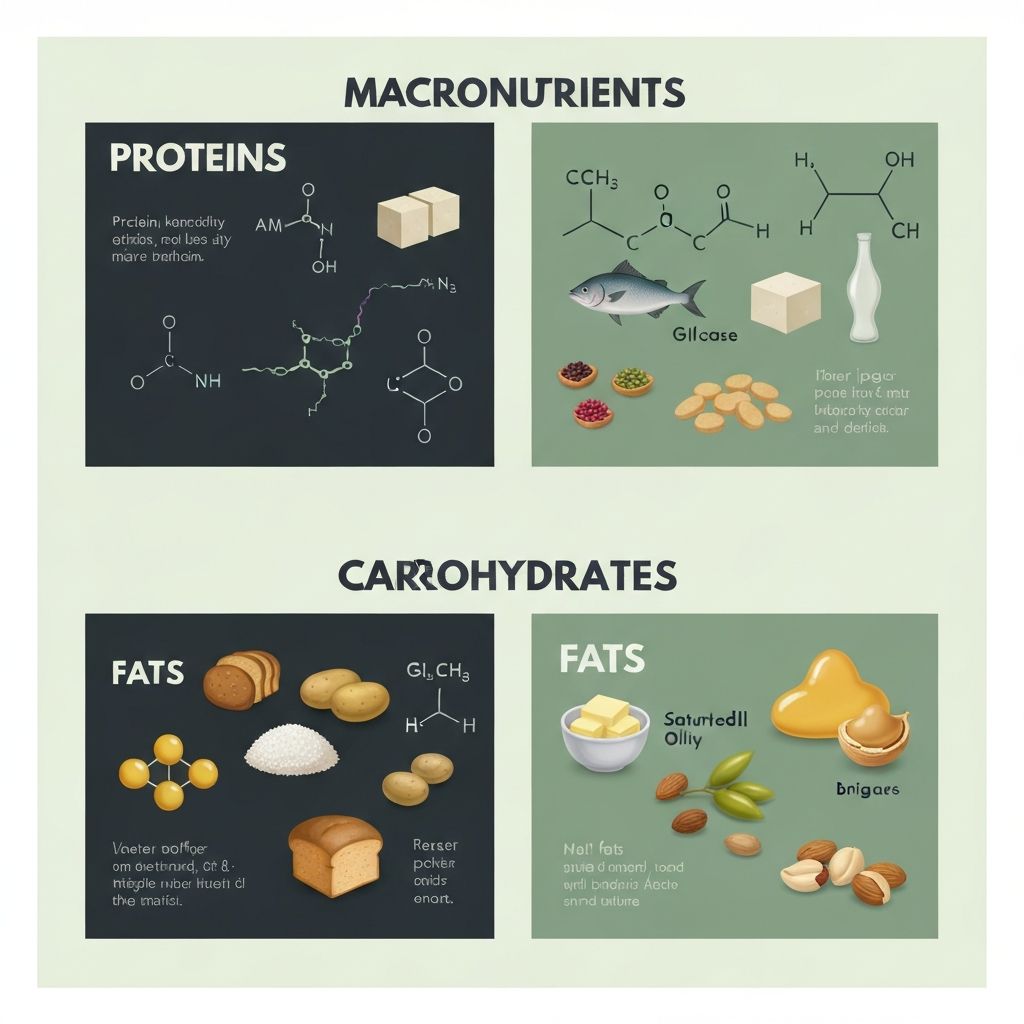
Macronutrients are nutrients your body needs in large quantities to function properly. These three primary macronutrients—protein, carbohydrate, and fat—provide energy and support various physiological processes.
Proteins
Proteins are composed of amino acids, which are essential for building and repairing tissues, producing enzymes, and synthesizing hormones. Protein-rich foods include lean meats, fish, poultry, legumes, nuts, dairy products, and eggs.
Your body digests protein more slowly than carbohydrates, contributing to prolonged satiety. Protein also has a higher thermic effect—meaning your body uses more energy digesting it compared to other macronutrients.
Carbohydrates
Carbohydrates are your body's primary energy source, providing glucose for cellular functions and brain activity. Complex carbohydrates—found in whole grains, legumes, and vegetables—provide sustained energy and fiber, which supports digestive health.
Simple carbohydrates, found in refined grains and sugary foods, provide quick energy but lack the sustained benefits and nutrients of complex carbohydrates.
Fats
Fats are essential for hormone production, nutrient absorption, brain function, and cell membrane integrity. Healthy fat sources include olive oil, avocados, nuts, seeds, and fatty fish rich in omega-3 fatty acids.
While fats are calorie-dense, they promote satiety and play crucial roles in metabolic health. Distinguishing between healthy and unhealthy fats is important for maintaining cardiovascular and metabolic balance.
How Macronutrients Affect Metabolism
Each macronutrient influences your metabolic processes differently:
Energy Production
Your body converts macronutrients into ATP (adenosine triphosphate), the primary energy currency for cellular functions. The efficiency of this conversion depends on multiple factors including metabolic rate, physical activity, and individual physiology.
Thermic Effect
The thermic effect of food—energy required to digest nutrients—varies by macronutrient. Protein has the highest thermic effect (approximately 20-30% of calories consumed), followed by carbohydrates (5-10%) and fats (0-3%).
Nutrient Partitioning
Your body partitions nutrients for different uses: energy production, structural components, or storage. Adequate protein, for example, supports muscle preservation during physical activity and recovery periods.
Metabolic Flexibility
Your body can shift between using carbohydrates or fats as primary fuel sources based on availability and demand. This metabolic flexibility supports varied dietary patterns and activity levels.
Macronutrient Ratios and Individual Needs
There is no universal macronutrient ratio that works for everyone. Individual needs vary based on age, activity level, metabolism, health status, and personal preferences.
"The optimal macronutrient ratio depends on your individual circumstances, not on following a standardized formula. Understanding your body's signals and finding a sustainable pattern is more important than adhering to specific percentages."
General Guidelines
- Protein: Recommended dietary allowance suggests 0.8g per kg of body weight for sedentary individuals; higher amounts support muscle maintenance during physical activity.
- Carbohydrates: Comprise 45-65% of daily calories in many dietary guidelines; needs vary based on activity level and metabolic factors.
- Fats: 20-35% of daily calories from healthy fat sources supports hormone production and nutrient absorption.
Practical Application
Understanding macronutrients supports informed dietary decisions:
- Include protein sources at each meal to support satiety and muscle health
- Choose complex carbohydrates for sustained energy and nutrient density
- Incorporate healthy fats for metabolic and cardiovascular support
- Pay attention to how different macronutrient ratios affect your energy and well-being
- Balance macronutrients based on your activity level and lifestyle patterns